The science, in plain English · June 2026
How long should you
stay in a sauna?
The short answer is around 15–20 minutes if you're healthy and used to the heat, 5–10 minutes if you're new, and zero more minutes the instant you feel dizzy or off, a rule that overrides everything else on this page. That's the whole answer, really. But the more interesting version comes from what the big Finnish longevity studies actually measured, which turns out to be a number most people guess wrong. So:
What the research measured
The studied session was shorter than you'd think.
The famous Finnish studies that tied regular sauna use to a longer life (the ones walked through in this plain-English review) were not built on heroic, sweat-pouring marathon sessions. The typical visit in the 2015 men's study was about 14 minutes at around 79°C. In, sweat, out. The longevity data, in other words, is built on coffee-break-length sauna trips, which is worth keeping in mind the next time someone implies that real sauna people stay in for 45 minutes.
Under 11 minutes
The baseline
Short sits were the comparison group — the risk everyone else was measured against.
11–19 minutes
About the same
Statistically indistinguishable from the short sits for sudden cardiac death.
Over 19 minutes
About half the risk
Men whose sessions ran past 19 minutes had roughly half the rate of sudden cardiac death of the short-sitters.
The 2018 follow-up, the one that included women, added a weekly-total version of the same point: people who logged more than 45 minutes a week in the sauna had a lower rate of heart-related death than people who logged 15 or less. Do the division across the 4–7 weekly sessions the studies favored, and you land right back at 10–20 minutes a visit. Everything keeps pointing at the same modest number.
Sources: Laukkanen et al., JAMA Internal Medicine, 2015 and BMC Medicine, 2018. These are observed patterns in a population, not prescriptions — see the honest-limits section of our full review.
The part nobody wants to hear
Frequency beats a long sit.
The natural move is to read “over 19 minutes was best” and assume 40 minutes is therefore twice as good, and the data does not back you up on this. Nothing in the longevity research tested, or rewarded, extra-long sessions, for the simple reason that the people being studied didn't sit that long. What the research kept rewarding was frequency: the 4–7-times-a-week groups posted the strongest associations on every outcome. The reward for overstaying, meanwhile, is the boring stuff your body was already going to charge you anyway, namely dehydration, dizziness, and walking out feeling wrecked rather than reset.
General health guidance, for instance Healthline's overview, caps sessions around 15–20 minutes for exactly that reason, with 5–10 minutes as the beginner setting. If only one sentence survives this page, make it this: a short session you repeat four times a week beats a long one you barely survive once.
- New to it? 5–10 minutes, lower bench, water before and after. Build up over weeks.
- Experienced? 15–20 minutes is plenty — it's where the studied habit lived.
- Feeling dizzy, sick, or pounding? Out now. Your body's signal overrules every timer and every study.
- Heart condition, pregnancy, low blood pressure, or heat-affecting medication? Talk to your doctor before any sauna practice. This page is information, not medical advice.
The practical problem
Fine — but how do you actually time it?
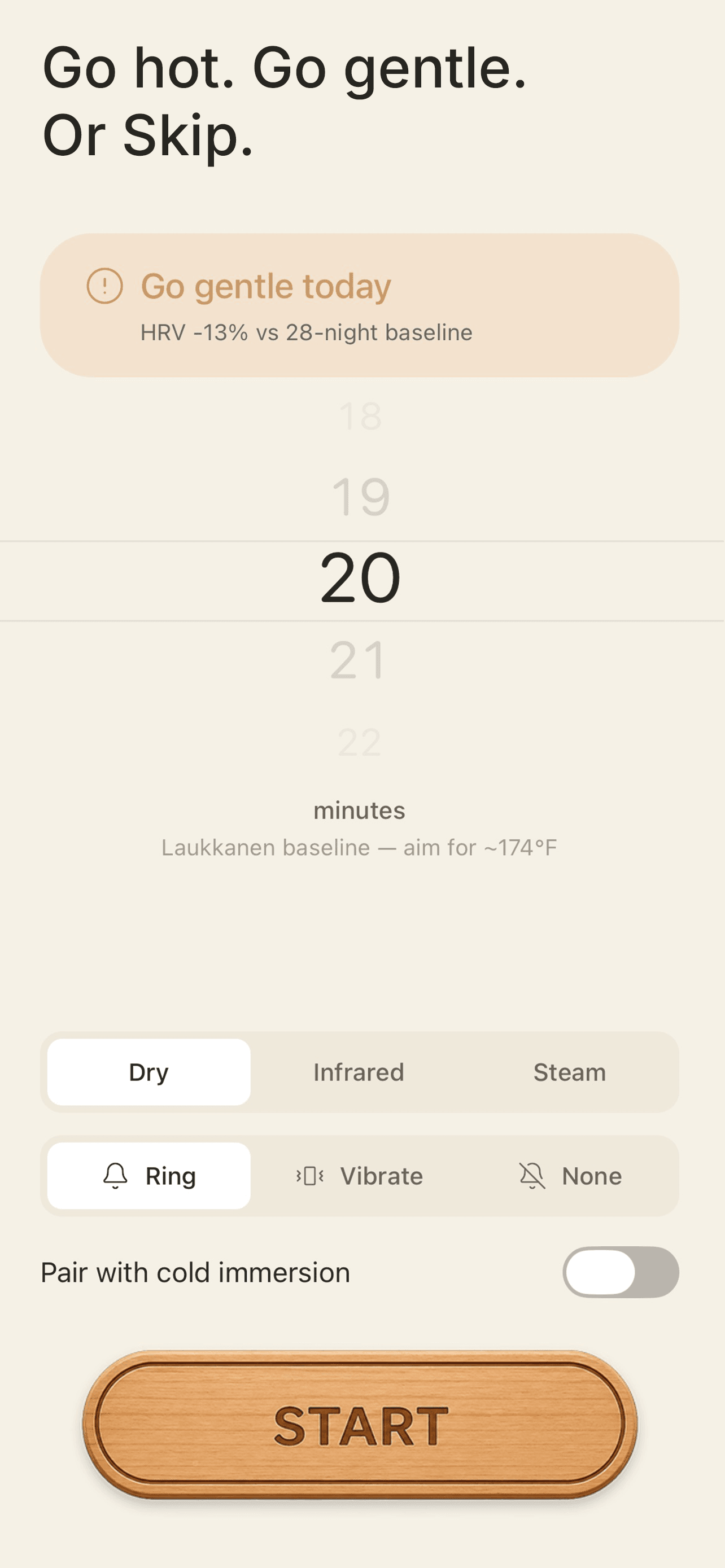
There's a small logistical comedy buried in “stay 15–20 minutes,” which is that your phone can't come in with you (saunas run at roughly double the temperature an iPhone is built for), most saunas don't have a clock you can read through the steam, and the hourglass on the wall is not going to tap you on the shoulder. So people guess, and a guessed 15 minutes has a way of quietly becoming 25.
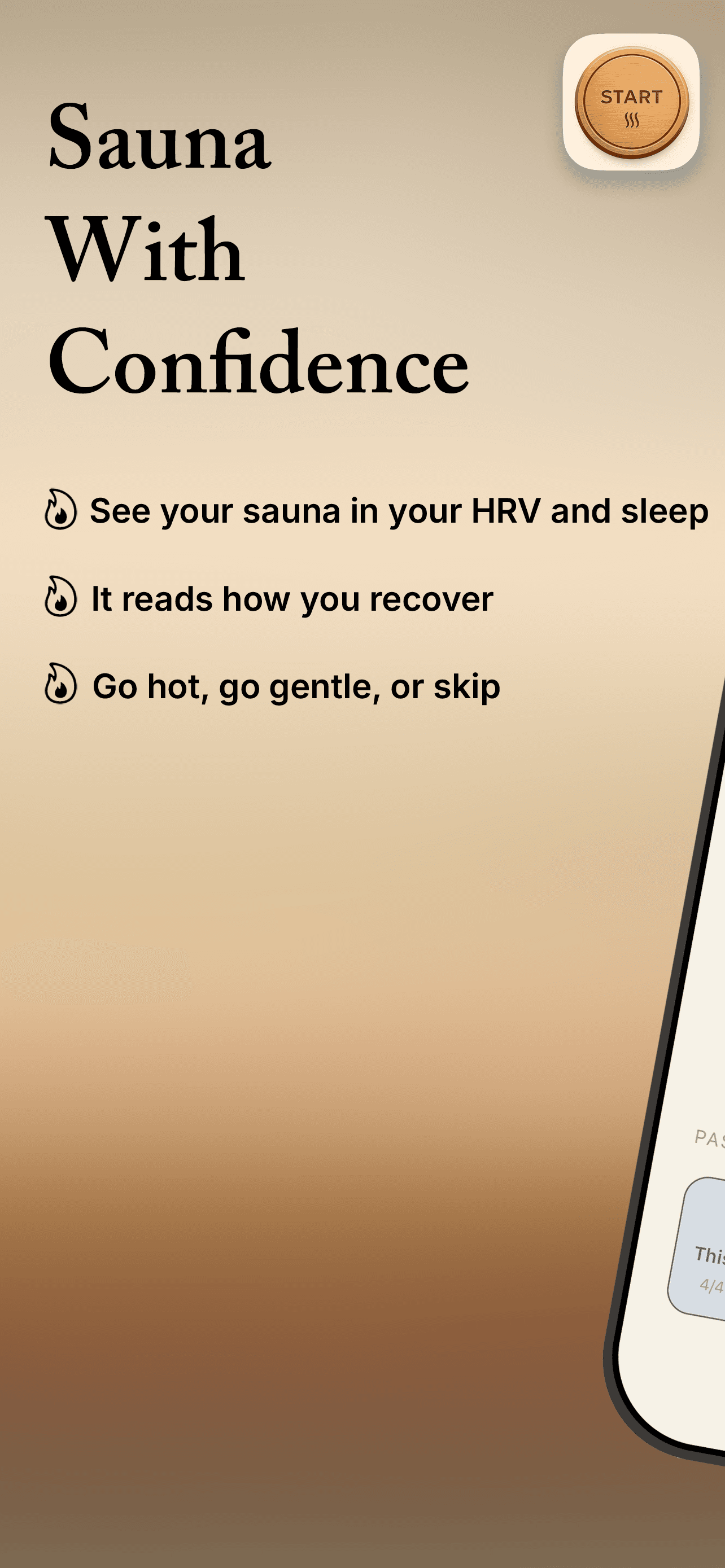
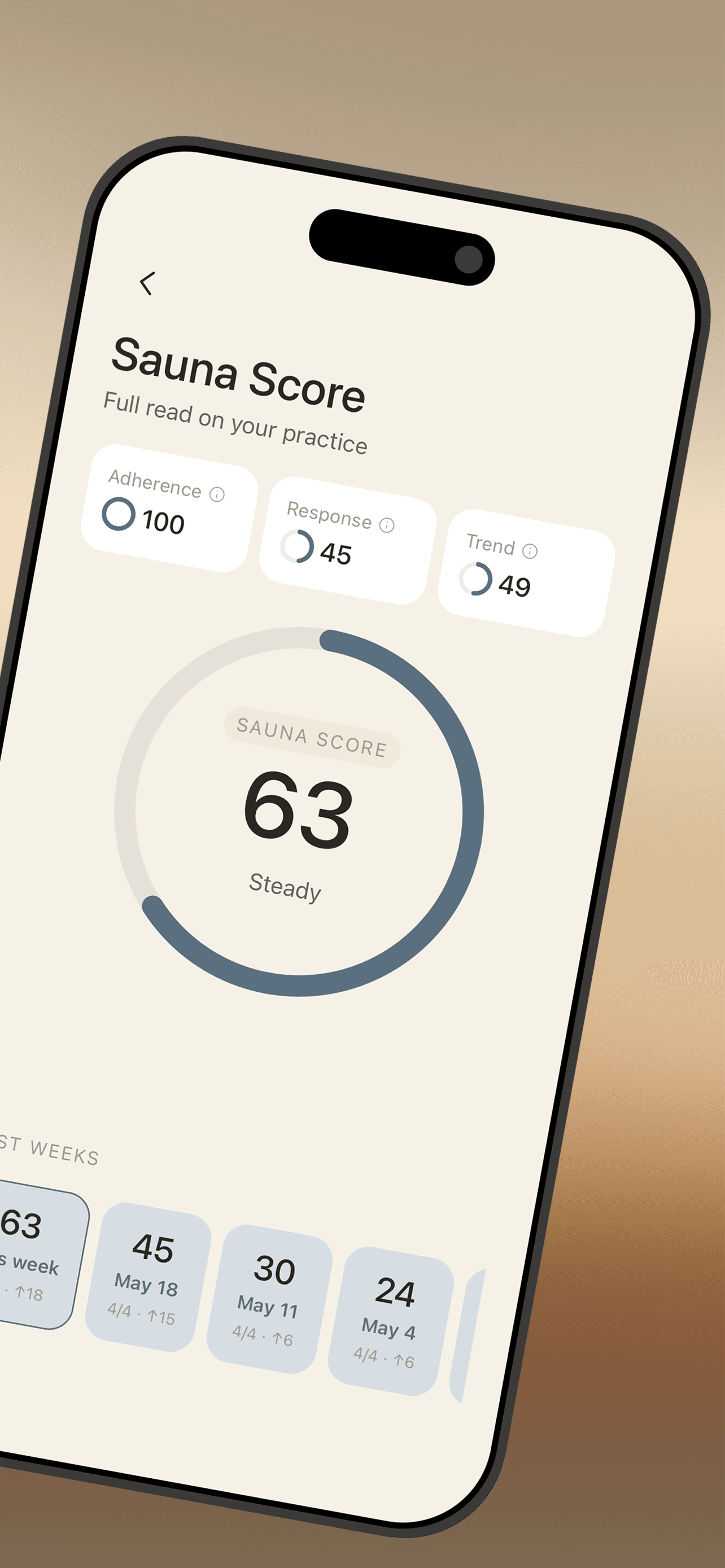
This is the dull little problem Sauna Score's timer is for. At a gym, the honest setup is to lock the phone away and log the session afterward. In your own sauna, or a friend's, you can set the length and leave the phone just outside the door, where the alarm is a time-sensitive iOS notification engineered to ring through a locked screen, loud enough to reach you on the other side. Either way the phone never goes into the heat. And across the weeks, the app reads whether the routine is moving your sleep, resting heart rate, and recovery, using the data your watch or ring already collects.
FAQ
Sauna timing — common questions.
How long should you stay in a sauna?show
For most healthy, sauna-accustomed adults, around 15 to 20 minutes per session is the widely-given guidance — and it matches the research: in the big Finnish longevity studies, the average session was about 14 minutes, and sessions over 19 minutes showed the strongest link to lower risk of sudden cardiac death. Past 20 minutes there's no studied extra benefit, just more heat strain and fluid loss. Always get out earlier if you feel dizzy, lightheaded, or unwell.
How long should a beginner stay in a sauna?show
Start short — 5 to 10 minutes is the standard advice — and build up over weeks as your body gets used to the heat. The people in the Finnish studies were lifelong sauna users; their 14-minute average came after years of practice, not on day one. Sit on a lower bench (it's cooler), drink water before and after, and leave the moment you feel off.
Is 30 minutes in the sauna too long?show
It's past everything the longevity research measured. The studied sessions averaged about 14 minutes, and even the strongest finding only went up to sessions over 19 minutes. Common health guidance caps sessions around 15–20 minutes because longer mainly adds dehydration and heat strain. If you want more heat in your week, the studied pattern was to go more often, not to sit longer.
How many minutes per week in the sauna is linked to benefits?show
In the 2018 Finnish study, people who totaled more than 45 minutes of sauna per week had a lower rate of heart-related death than those who totaled 15 minutes or less. Spread across the 4–7 weekly sessions the studies favored, that's roughly 10–20 minutes a session — short and regular, not occasional and heroic.
How long should you stay in an infrared sauna?show
The longevity research can't really answer this. The Finnish studies used traditional saunas at roughly 76–79°C; infrared cabins run much cooler (often 45–60°C), so people commonly sit in them longer, but there's no comparable long-term outcome data behind any specific infrared duration. Follow the manufacturer's guidance and your own comfort, and treat any precise 'optimal infrared minutes' claim with suspicion.
When should you get out of the sauna early?show
Immediately if you feel dizzy, lightheaded, nauseous, headachy, or your heart is pounding uncomfortably — those are your body's signals that it's done, and they overrule any timer. Skip the sauna entirely when you're ill or dehydrated, and talk to your doctor first if you're pregnant, have a heart condition, low blood pressure, or take medication that affects how you handle heat.
A note on what this isn't
This page is informational — a summary of published research and common safety guidance, not medical advice, diagnosis, or treatment. The studies describe patterns observed in groups; they don't promise you a personal outcome. If you have a cardiac condition, are pregnant, have low blood pressure, or take medication affecting thermoregulation, talk to your doctor before any sauna or cold-exposure practice.
Time the session right.
Then see what it did.
Sauna Score times your session from outside the hot room, then reads your sleep, heart rate, and recovery across the weeks, and says so plainly when the data is still too thin to call.